Clawfoot bathtub feet get damaged or go missing more often than you’d expect. Rust, impact damage, movers who aren’t careful — original feet take a beating. And original feet can be genuinely difficult to replace.
Here’s what your options actually are.
The Problem with Original Cast Iron Feet
Original clawfoot feet were cast individually and typically bolted directly to the underside of the tub through threaded bosses cast into the tub body. The bolt patterns were not standardized. The style, size, and weight varied by manufacturer and era.
This means finding replacement feet that match exactly requires:
- Knowing the original manufacturer (not always possible on antique tubs)
- Finding a supplier who stocks that specific style
- Hoping the bolt pattern matches
Often none of those things work out. And even if you find visually similar feet, the bolt pattern may be 1/4 inch off from what your tub has.
Re-Casting: Usually Not Worth It
Re-casting original feet — having a foundry make new feet from a mold of your originals — is an option, but it’s expensive and slow. Unless your feet are genuinely rare and ornate and the tub has significant antique value, the cost of re-casting usually doesn’t make financial sense compared to the alternatives.
Custom casting runs $400–$800+ per set of four feet, plus shipping heavy cast iron both directions. For most tubs that are damaged or missing feet, this is overkill.
Strap-Style Replacement Systems: The Practical Solution
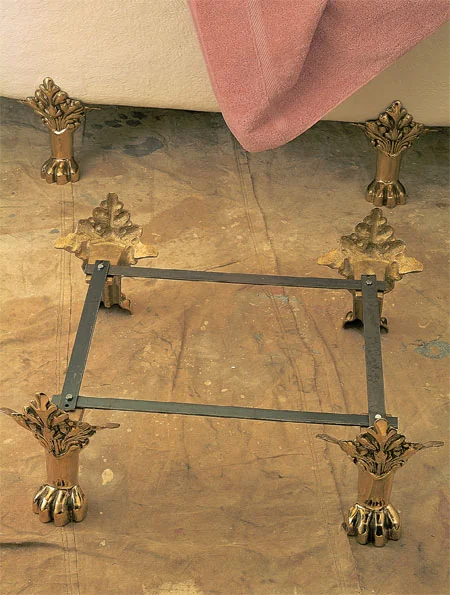
The most practical solution for most clawfoot tub owners is a strap-style replacement foot system.
These systems use metal straps that form a cradle under the tub — the tub body rests in the straps, and decorative feet attach to the strap brackets. The genius of it: the straps distribute the tub’s weight and mount to the floor, so you’re not matching bolt patterns at all.
Clawfoot Tub Leg Replacement Set on Amazon
What to look for in a strap system:
- Weight rating — a cast iron clawfoot tub weighs 300+ lbs empty. Add water and a person and you’re over 700 lbs. Make sure the system is rated accordingly.
- Finish options — most systems come in chrome, oil-rubbed bronze, brushed nickel, and white. Match your faucet and fixtures.
- Foot style — ball-and-claw style, bun foot, and tapered leg styles are all available. Claw-and-ball is the classic.
- Adjustable height — some systems allow leveling, which matters on uneven floors.
Installation basics:
- Remove the old damaged feet (or remove the tub from wherever it sits)
- Attach the mounting brackets/straps according to the product instructions — these typically bolt to the underside of the tub rim or wrap around the tub body
- Attach the decorative feet to the brackets
- Set the tub and level it
This approach takes the bolt-pattern problem completely off the table. You’re not matching original mounting points — the straps support the tub from the outside.
When Original Replacement Actually Makes Sense
There are situations where finding matching original feet is worth the effort:
The tub has antique or collector value. Some clawfoot tubs — particularly well-documented maker’s marks on early American cast iron from Kohler, Standard, or American Standard — have collector interest. Altering the feet with aftermarket parts reduces that value.
The feet are ornate and irreplaceable. Some Victorian-era feet are genuinely beautiful and specific — detailed animal claw motifs, unusual profiles, unusual size. If you have one of these and can find the original manufacturer’s reproduction parts, that’s worth pursuing.
You already have three matching feet. If three of four feet are intact and only one is damaged or missing, it’s worth trying to match it rather than replacing all four with a new system.
For most situations — damaged or missing feet, no strong antique value, standard ball-and-claw style — the strap system is faster, cheaper, and less frustrating.
Sometimes a New Tub Is the Right Answer
If the feet are the least of your problems — if the tub has significant rust, structural issues, or the enamel is badly damaged — replacing the tub entirely might make more sense than spending money on a replacement foot system.
New acrylic clawfoot tubs are dramatically lighter than cast iron (sometimes under 100 lbs), ship free from Amazon, and come with a full parts and finish warranty. For more on that option, see new acrylic clawfoot bathtubs — are they worth it?
If the tub is structurally sound and the feet are the only problem, the strap-style replacement system is almost certainly your best path.